Wood rot repair Orlando homeowners search for usually starts with one soft spot on a windowsill or deck board that shouldn’t give under a thumb press. That soft spot is a sign fungi have already started breaking down the wood’s structure. The good news: caught early, most decay is a manageable, affordable fix rather than a full rebuild.
Orlando’s humidity, afternoon storms, and long, wet summers create near-perfect conditions for decay fungi to thrive year-round. Left alone, a small patch of damage can spread into framing, fascia, or deck joists within a season or two. This guide walks through how to spot it, what drives repair costs, and how a licensed contractor approaches the fix — so you can make an informed decision instead of guessing.
📌 Key Takeaways
- Soft, spongy, or discolored wood almost always means active decay, not just surface staining.
- Florida’s humidity makes wood rot repair more urgent here than in drier climates — delays cost more later.
- Repair cost depends on location, depth of damage, and whether structural framing is involved.
- Decks, window sills, fascia, and soffits are the most common trouble spots we see across Central Florida.
- Routine inspections and moisture control are the cheapest long-term prevention strategy.
Jump to a section:
- What Causes This Decay and Why Orlando Homes Are Vulnerable
- How to Spot Rot Damage Before It Spreads
- What Drives Repair Cost
- Common Areas That Need Wood Rot Treatment
- Our Wood Rot Repair Process
- Repair Services Across Central Florida
- Preventing Rot Damage Long-Term
- FAQ
What Causes This Decay and Why Orlando Homes Are Vulnerable
Quick Answer: Wood rot is fungal decay that breaks down wood fibers when moisture stays trapped against untreated or aging lumber. Orlando’s warm, humid climate accelerates this process compared to drier regions.
Decay fungi need three things to grow: oxygen, a food source, and consistent moisture above roughly 20%. According to the USDA Forest Products Laboratory, certain fungi can begin breaking down cellulose in as little as a few weeks once wood stays saturated. That’s why a leaky gutter or a poorly flashed window can quietly cause serious damage before anyone notices.
Why Florida Homes Deteriorate Faster
Central Florida sees heavy rain, high humidity, and intense sun that expands and contracts lumber repeatedly. The UF/IFAS Extension has documented how this cycle weakens wood fibers faster than in cooler, drier states. Combine that with older homes in areas like Lake Mary or Oviedo, and the risk of decay climbs every season it goes unaddressed.
💡 Expert Insight: In our experience, the homes that avoid major wood rot repair are the ones where owners check exterior trim and deck ledgers every spring, not just after a storm.
How to Spot Rot Damage Before It Spreads
Quick Answer: Look for soft or spongy texture, dark staining, a musty smell, or paint that’s peeling in one specific spot. These signs usually mean decay has already started beneath the surface.
Dry rot looks crumbly and cracked, almost like dried mud. Wet rot feels soft, damp, and darker in color, often near gutters, window frames, or deck posts touching the ground. Both types compromise strength, but wet decay tends to spread faster in Florida’s climate.
A Simple Homeowner Test
Press a screwdriver into suspect wood at a 45-degree angle. If it sinks in easily without much resistance, that area likely needs professional treatment rather than a surface patch. Healthy wood should resist and feel firm throughout.
| Symptom | Likely Cause | Recommended Action |
|---|---|---|
| Soft, spongy wood | Wet rot from trapped moisture | Schedule inspection promptly |
| Crumbly, dry texture | Dry rot / fungal spread | Remove and replace affected section |
| Musty odor near trim | Hidden moisture behind siding | Check flashing and caulking |
| Peeling paint in one spot | Localized water intrusion | Investigate before repainting |
| Sagging deck boards | Structural decay in joists | Full deck inspection recommended |
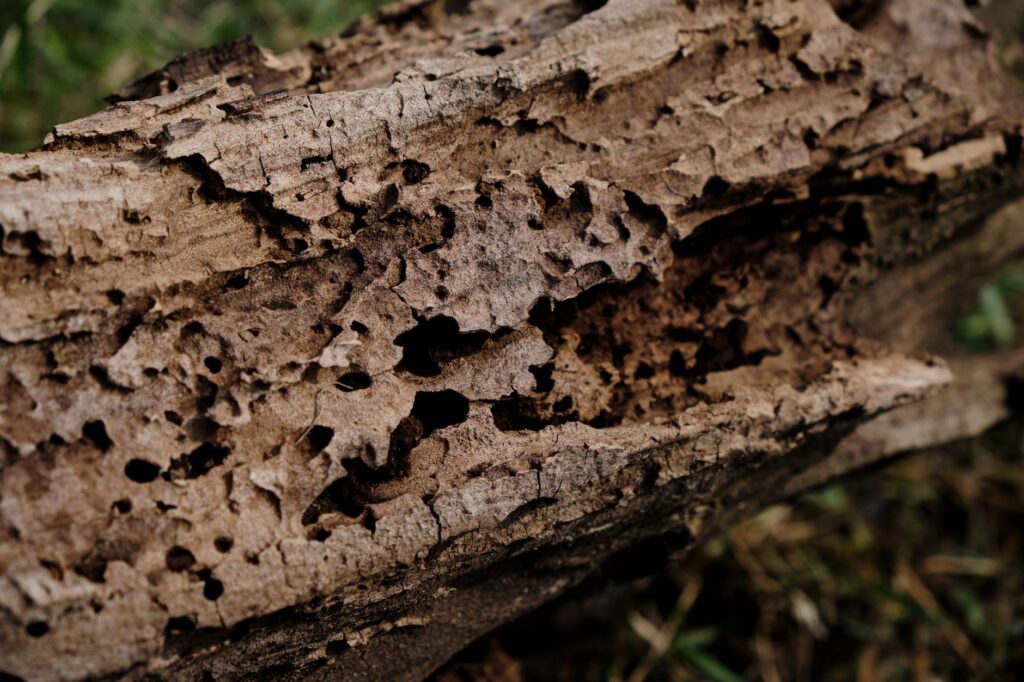
⚠️ Common Mistake: Painting over soft or discolored wood without addressing the moisture source. This traps the damage and hides it until it’s far worse.
What Drives Repair Cost
Quick Answer: Cost depends mainly on how deep the decay runs, whether structural framing is affected, and how accessible the area is. Small trim repairs cost far less than deck joist or window frame replacement.
We intentionally avoid quoting flat prices here because every project is different, but homeowners should understand the main cost factors before requesting an estimate. Surface-level damage on fascia or trim is usually the simplest fix. Structural decay involving deck framing, subfloor, or load-bearing members takes more time, materials, and expertise.
Structural vs. Cosmetic Damage
Cosmetic damage affects appearance and paint adhesion but hasn’t reached framing. Structural decay compromises the wood’s ability to bear weight — this is common in deck cases where joists sit close to grade. The International Code Council (ICC) sets residential code standards that guide how compromised structural members must be replaced, not just patched.
📊 Data Point: According to moisture research from the U.S. EPA, controlling indoor and exterior moisture is the single most effective way to prevent recurring decay — often more impactful than any one repair.
Common Areas That Need Wood Rot Treatment
Quick Answer: Decks, window sills, fascia boards, and soffits see the most decay in Central Florida homes. Each area has its own moisture exposure and repair approach.
Decks and Outdoor Structures
Deck decay often starts at ledger boards, post bases, and anywhere wood touches soil or standing water. We’ve walked into more than one Apopka backyard where a deck looked fine from a distance but had rotted support posts underneath. If your boards flex or feel spongy, that’s usually a sign it’s time for a closer inspection rather than a quick patch job. Our decks team handles everything from single-board replacement to full structural rebuilds.
Windows, Fascia, and Soffits
Window-area decay is common where old caulking has failed, letting rain seep behind the frame. Fascia and soffit damage usually traces back to clogged gutters or roof leaks. Both areas are visible from the ground, making them easier to catch early with a simple seasonal walk-around.
✅ Quick Tip: Check window sills and deck ledgers every spring and after major storms — these two spots fail first in Florida’s humidity.
Our Wood Rot Repair Process
Quick Answer: A proper repair removes all decayed material, treats surrounding wood, and replaces it with moisture-resistant materials matched to code. Skipping any step usually means the damage returns within a year or two.
Step-by-Step Approach
- Inspect and probe every suspect area, not just the visible damage, to find the full extent of decay.
- Remove all affected wood — cutting back to solid, healthy material rather than patching over soft spots.
- Address the moisture source, whether that’s failed flashing, poor drainage, or a roof leak.
- Replace with appropriate materials, following applicable residential code for structural sections.
- Seal and finish the repair to match existing trim, siding, or decking for a clean result.
We hold a Residential Contractor License (CRC1333200) and a Category V Gas License (LI45277), and we follow the safety practices outlined by OSHA’s construction standards on every job site. Homeowners can verify any Florida contractor’s license through the Florida DBPR licensing lookup before hiring.
💡 Expert Insight: We’ve found that treating only the visible damage — without checking a foot beyond it — is the number one reason repairs fail early.
Homes with more extensive decay sometimes reveal masonry or foundation concerns nearby, especially around older chimneys or porch supports; our masonry repairs team often works alongside carpentry crews on those jobs.
Repair Services Across Central Florida
Quick Answer: We provide wood rot repair services throughout Central Florida, including Orlando, Lake Mary, Oviedo, and communities across Marion, Seminole, and Hillsborough counties.
Every region we serve deals with the same humid subtropical climate that drives decay, though exposure varies by neighborhood. Homes near Lake Mary and Oviedo often see damage around window frames from lake-effect humidity, while older properties in Gainesville and Ocala frequently show deck and fascia decay from decades of Florida seasons.
Local Service Highlights
We’ve handled repair projects from Brandon and Apollo Beach in Hillsborough County to Deltona and Deland along the Volusia County corridor. Each market has its own building patterns — older homes near Crystal River and Homosassa, for example, often need fascia and soffit attention where coastal humidity is highest. Wherever you’re located within our Central Florida service area, the diagnostic approach stays consistent: find the moisture source first, then repair the wood.
⚠️ Common Mistake: Assuming any rot repair, regardless of contractor, is equivalent to hiring a properly credentialed team — always confirm licensing status directly.

Preventing Rot Damage Long-Term
Quick Answer: Consistent gutter maintenance, proper drainage, and sealing exposed wood are the most effective ways to prevent decay from returning. Prevention costs far less than repeated repairs.
Simple Habits That Make a Difference
Clean gutters twice a year to stop water from pooling near fascia and soffits. Re-caulk window frames every few years, since failed sealant is one of the most common entry points for moisture. Keep deck posts and any wood-to-soil contact points elevated or treated, since ground contact accelerates decay dramatically.
| Prevention Task | Frequency | Why It Matters |
|---|---|---|
| Clean gutters | 2x per year | Prevents overflow onto fascia/soffit |
| Inspect window seals | Annually | Stops water intrusion at frames |
| Check deck posts/ledgers | Annually | Catches structural decay early |
| Reseal exterior wood trim | Every 2-3 years | Maintains moisture barrier |
| Trim vegetation near siding | As needed | Reduces trapped humidity |
Groups like the NAHB and pest specialists at the National Pest Management Association both note that moisture control and pest prevention often overlap, since termites and decay fungi thrive in similar conditions. Addressing one frequently helps prevent the other.
✅ Quick Tip: If termites have ever been an issue at your property, get any decay repair paired with a pest inspection — the two problems often travel together.
FAQ
How much does wood rot repair cost in Orlando?
Cost depends on the size and depth of the damage, whether framing is involved, and how accessible the area is. Small trim repairs are far less involved than structural deck or window frame replacement, so an on-site inspection is the only accurate way to estimate cost.
Can rotted wood be repaired without replacing the whole deck?
Often yes — if decay is limited to specific boards, joists, or posts, targeted repair can address just the affected sections. Widespread structural damage usually calls for a fuller rebuild, which is why an inspection matters before deciding.
What does wood rot repair near me typically involve?
A local repair starts with locating the moisture source, removing all decayed wood, and replacing it with properly treated materials. The process finishes with sealing and finishing work to match the surrounding structure.
Is wood rot repair covered by homeowners insurance?
Coverage varies by policy and cause — sudden water damage may be covered, while gradual decay from neglect typically isn’t. It’s worth reviewing your specific policy and documenting damage before starting repairs.
How do I know if it’s decay or termite damage?
Rotted wood tends to feel soft, spongy, or crumbly and often shows discoloration, while termite damage may show hollowed-out channels and mud tubes. A professional inspection can distinguish between the two, since treatment approaches differ.
Does window rot repair require full window replacement?
Not always — if damage is limited to the sill or frame edges, targeted repair can often save the window unit. Extensive decay through the frame’s structure may make full replacement more practical long-term.
How quickly does wood rot spread in Florida’s climate?
Given consistent humidity and rainfall, decay can progress noticeably within a single season if the moisture source isn’t addressed. That’s part of why prompt inspection matters more in Florida than in drier climates.
Final Thoughts
Wood rot repair Orlando homeowners need doesn’t have to mean a stressful, expensive ordeal when it’s caught early and handled by a licensed professional. Understanding the warning signs, the real cost drivers, and the value of addressing moisture at its source puts you ahead of most decay problems. Our team holds Florida Residential Contractor License CRC1333200 and Category V Gas License LI45277, and we approach every project with the same honest, thorough process outlined above.
Next steps:
- Walk your property and check windows, fascia, and deck posts for soft or discolored wood.
- Note any areas with musty smells, peeling paint, or standing water nearby.
- Request a professional inspection before the damage spreads further.
- Ask your contractor to confirm licensing and walk you through their repair process.
If you’ve spotted soft or damaged wood anywhere on your property, don’t wait for it to spread — contact our team today to schedule an inspection.